Programme Structure
EDLE presents a combination of course work and research. The curriculum is devised to provide advanced and challenging education both to lawyers and economists. Where applicable/possible candidates will be able to choose between basic and advanced courses depending on their educational background.
EDLE Empirical Legal Studies (ELS) Track
Empirical research is becoming more and more prevalent in legal scholarship. Although theory is important in the economic analysis of law, some questions require an evidence-based approach that would test the theories. The aim of the EDLE Empirical Track is to provide the PhD researchers with the necessary tools to understand empirical studies, to develop a critical perspective on such methods and finally, to conduct their own empirical research. This track is designed both for lawyers and for economists. Lawyers without prior background in statistical analysis will attend introductory courses before continuing to empirical studies. Economists, even with background in statistics, will benefit from this track by learning how to apply those methods to legal questions.
Research Topics
The EDLE network counts on a large faculty able to offer supervision on a very large set of topics. Depending on the academic background, the thesis can be more economically or legally oriented. Some theses are rather theoretically focused, others more policy-oriented and some are empirical. Research topics may be proposed by the candidate or by the faculty. More detailed information on research topics of interest to the Partner Universities can be found on the EDLE website.
From the first day onwards the candidates start working on their thesis, based upon the research proposal on the basis of which they were admitted to the EDLE programme. The candidate is assigned a (provisional) supervisor who will help to identify (and in many cases narrow down) a suitable thesis topic.
EDLE Academic Calendar (full cycle of the programme) (changes may apply)
| Time |
Location |
Programme |
| Upon arrival |
|
The candidate is (provisionally) assigned a supervisor who will help to identify a suitable thesis topic |
| October – March 1st year |
Bologna |
Research + taught courses (incl. Empirical Track) |
| |
|
|
| November 1st year |
Bologna |
Workshop on Writing a PhD / presentation skills |
| November 1st year |
Bologna |
Introduction meeting with (Associate) Partner Universities & Attending 3rd year seminar |
| By December at the latest |
|
The candidate has decided the thesis topic and is assigned (at least) two supervisors |
| March 1st year |
Bologna |
Presentation final research proposal that includes a clearly defined research issue, research question, chosen methodology and a literature survey |
| April – July 1st year |
Hamburg |
Research + EDLE Empirical Track course + Summer School |
| June / July 1st year |
Hamburg |
Presentation introduction chapter (introduction, problem definition, research question, limitations, methodology, scientific and societal relevance, preliminary bibliography) + summary of each planned content chapter and time schedule |
| September – March 2nd year |
Rotterdam |
Research + EDLE Empirical Track courses + EGSL courses + EDLE, ECELS and other relevant seminars |
| October / December 2nd year |
Rotterdam |
Presentation (new) content chapter |
| January / March 2nd year |
Rotterdam |
Presentation (new) content chapter |
| February/March 2nd year |
|
Attending the joint seminar ‘The Future of Law and Economics’ and giving a poster presentation |
| From April 2nd year onwards |
Home university |
Research + presentation of research results |
| November 3rd year |
Bologna |
Presentation (new) content chapter at 3rd year seminar |
| November 3rd year |
Bologna |
Information session on defence procedure |
| February/March 3rd year |
|
Presentation (new) content chapter at the joint seminar ‘The Future of Law and Economics’ |
| From October 3rd year onwards |
Rotterdam |
Defending thesis in Rotterdam |
|
|
|
|
|
During the first semester of the first year, the doctoral candidates stay in Bologna. Candidates with a legal background will be offered the possibility to attend introductory courses in Maths, Game theory, and Statistics. Candidates with a background in economics will be offered the possibility to attend advanced courses in Microeconomics, Econometrics, and Financial Economics. All candidates must take a course either in Statistics or Econometrics. They also have to take the following dedicated courses, covering the core topics of the programme: Introduction to Law and Economics; Empirical Methods for Law and Economics (*); Experimental Economics (*); Modeling Law; Behavioural Law and Economics (*); Law and Economic Development; Behavioural Game Theory; Introduction to European Competition Law; Research methods in Applied Economics.
(*) part of the EDLE Empirical Legal Studies (ELS) Track.
The EDLEs can, on a voluntary basis, take any of the courses offered by the School of Economics.
All courses require class work and participation, with assignments and presentations, and a final test. Candidates also attend Law and Economics seminars held by international scholars.
Ultimately in December all first-year candidates formulate their research question and send this to their supervisors (if already assigned) with a cc to the EDLE Academic Coordinator (edle@law.eur.nl). If not yet assigned, as soon as possible afterwards the supervisors will be assigned by the EDLE Coordination Board and communicated to the candidate.
In March all first-year candidates present in Bologna their final research proposal that includes a clearly defined research topic, research question, chosen methodology and a literature survey.
During the second semester of the first year, the doctoral candidates stay in Hamburg. In the months of April and May the doctoral candidates will attend the course “Empirical Legal Studies” (part of the EDLE Empirical Legal Studies (ELS) track).
From June to July, the doctoral candidates will participate in the four-week long Summer School in Law and Economics, a lecture series held by internationally renowned scholars. Doctoral candidates will participate in all activities offered by the Summer School programme. Topics represent research challenges of fundamental or current interest in the field of Law and Economics. Within this Summer School, EDLE candidates have the opportunity to build up an international research network with leading scholars.
In addition, doctoral students are welcome to attend the Jour Fixe seminars as well as the Hamburg Lectures in Law and Economics, a lecture series that takes place every Wednesday evening during the semester. The lectures, held by internationally renowned researchers from Germany and abroad, deal with current research results in the field of economic analysis of law and address a broad audience through their interdisciplinary approach.
During the semester in Hamburg all first-year candidates give a presentation on their introduction chapter (introduction, problem definition, research question, limitations, methodology, scientific and societal relevance, preliminary bibliography), including a summary of each planned content chapter and time schedule.
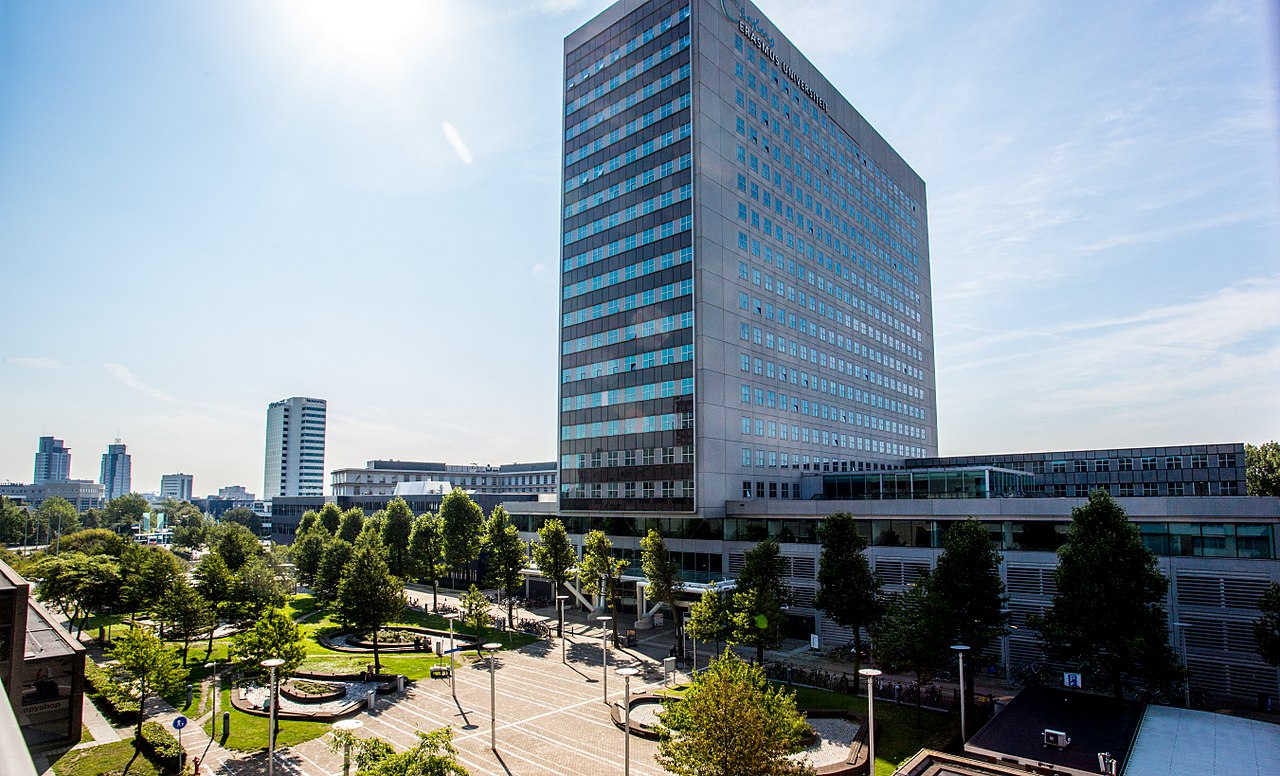
During the first semester of the second year, from September to March, candidates attend and actively take part in the cycle of EDLE, ECELS (Erasmus Centre of Empirical Legal Studies) and other relevant seminars and courses scheduled at Erasmus School of Law. The format of these seminars includes a presentation of the candidates’ work in progress, (written) peer feedback and the discussion by a senior staff member of the faculty/institute/department, preferably (where possible) a leading researcher in the field. The mandatory courses may vary, but will include courses to (further) develop soft skills, as part of Erasmus Graduate School of Law (EGSL). The mandatory courses in the EDLE Empirical track include: Advanced Research Designs and Methods of Causal Inference, and Quantitative Text Analysis. In March the candidates take part in the Joint Seminar and give a poster presentation.
At the end of the first semester of the second year (end of March), candidates will move to one of the participating universities (their home university).
In the third year, candidates will present their work twice at a collective workshop, organised at or by one of the Partner Universities, with the standard format (presentation + discussion by a senior staff member). In November in Bologna and in March at the Joint Seminar, organised by Rotterdam.
In all Partner Universities, attendance of courses and dedicated activities is mandatory. Any absence needs to be properly motivated and priorly approved by the Local Director of that Partner University.
The defence procedure takes up to approx. six months after completion of the draft manuscript. The general timetable is provided below.
Thesis defence – general timetable
|
|
Thesis final draft manuscript + propositions and mandatory annexes sent to supervisors for approval |
| 8 weeks later |
Thesis final manuscript (approved by the promotors) sent to inner committee |
| 6 weeks later |
Deliberation deadline inner committee |
| Time for finalizing the manuscript before it’s sent to the printer |
| 5 weeks later |
Thesis to printer & plenary committee |
| After approval of the thesis and the plenary committee and by the registrar a date for the defence can be set by the promotors in consultation with the defendant and the plenary committee |
| 5 weeks later |
Thesis book ready (sent to committee members, registrar, etc) |
| 5 weeks later |
Defence date in Rotterdam |
Monitoring
The EDLE is a joint doctorate programme with joint supervision and close monitoring. Participants are asked to send bi-annual updates to their supervisors on their progress, activities undertaken during the past six months and the planning for the next six months. Furthermore, the general planning of the individual PhD trajectory is checked (on feasibility) and adjusted where necessary. The document for reporting the individual research progress will be completed gradually during the PhD.
After the first presentation in Rotterdam (December 2nd year) an individual evaluation meeting based on the Training and Supervision Plan (TSP) takes place with at least the Rotterdam supervisor and an EDLE MT member.
Monitoring – yearly general timetable
| January |
PhD Progress report |
| February |
Supervisors report |
| March |
Evaluation individual progress EDLE board meeting |
| September |
PhD Progress report |
| October |
Supervisors report |
| November |
Evaluation individual progress EDLE board meeting |
| December (2nd year) |
Evaluation meeting based on the TSP |
| After termination of the scholarship: |
| January |
Annual general (short) report |
| February |
Update by supervisors |





 Hanneke Luth
 Sofia Amaral-Garcia
 Alexander Vasa
 Elena Reznichenko-Kantorowicz
 Ayman Fouda
 Chih-Ching Lan
 Bryan Khan